
Best Drought-Tolerant Landscaping Ideas for California Homes
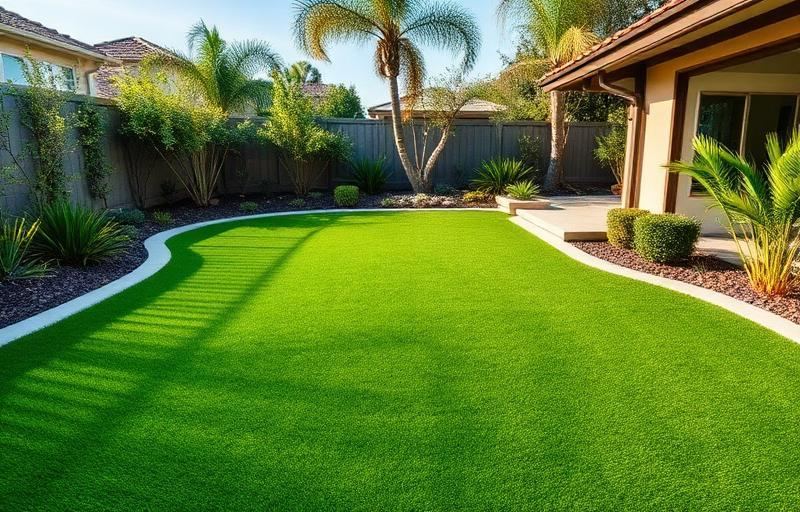
A lower-water landscape should respond to the site's exposure, soil, drainage, plants, irrigation, intended use, maintenance capacity, local rules, and budget. These options can reduce irrigated lawn or improve watering efficiency, but actual water and bill savings vary.
1. Replace Lawn with Artificial Turf
Replacing irrigated lawn with artificial turf can reduce routine landscape water use. Actual savings depend on the previous irrigation schedule, local rates, rinsing or cooling, and the amount of lawn replaced.
2. Expand Useful Hardscape Carefully
A paver, concrete, gravel, or stone area can reduce irrigated square footage, but surfaces still need cleaning and may affect heat, runoff, infiltration, trees, accessibility, and permitting. Add only the area the household will use.
3. Consider California-Native Plants
Appropriate native plants may support habitat and fit local conditions after establishment. Species and cultivar suitability still depend on the property's region, sun, mature size, soil, drainage, irrigation, fire exposure, pets, and maintenance.
4. Compare Climate-Adapted Plantings
Some Mediterranean-climate plants can fit Central Valley sites, but no short plant list works everywhere. Confirm invasive status, mature size, roots, fruit or litter, toxicity, chill or heat needs, irrigation, and local fire guidance before selection.
5. Convert to Drip Irrigation
A properly designed drip system delivers water near plant root zones and can reduce overspray and runoff. Actual water savings depend on system design, scheduling, pressure, plant needs, and maintenance.
6. Add Mulch to Planting Beds
An appropriate mulch layer can reduce evaporation, moderate soil temperature, and suppress some weeds. Depth and material should be selected for the plants, soil, drainage, and fire-safety considerations.
7. Evaluate Decomposed-Granite Paths
DG may suit selected low-water paths when slope, compaction, stabilization, edging, drainage, accessibility, dust, tracking, and maintenance are addressed. It should not be assumed permeable or universally suitable from the material name alone.
8. Group Plants by Water Needs
Hydrozoning, or grouping plants with similar water needs together, lets you irrigate efficiently and avoid overwatering low-water plants.
9. Evaluate a Permeable-Paver System
A designed permeable pavement can manage some runoff where the subgrade, groundwater, base, outlet, maintenance, loads, and local rules support it. Confirm the complete tested system and drainage design rather than widening joints in a standard installation.
Ready to Go Water-Wise
Choice One Landscape designs and installs drought-tolerant landscapes across the Central Valley and East Bay. Request a free estimate today.